
How a Friday Night Walmart Trip Became a Multi-Site Publishing Task?
A Walmart shelf-label observation became a structured StoryShellOS publishing workflow with source notes, images, site-specific drafts, social copy, staging, and approval gates.
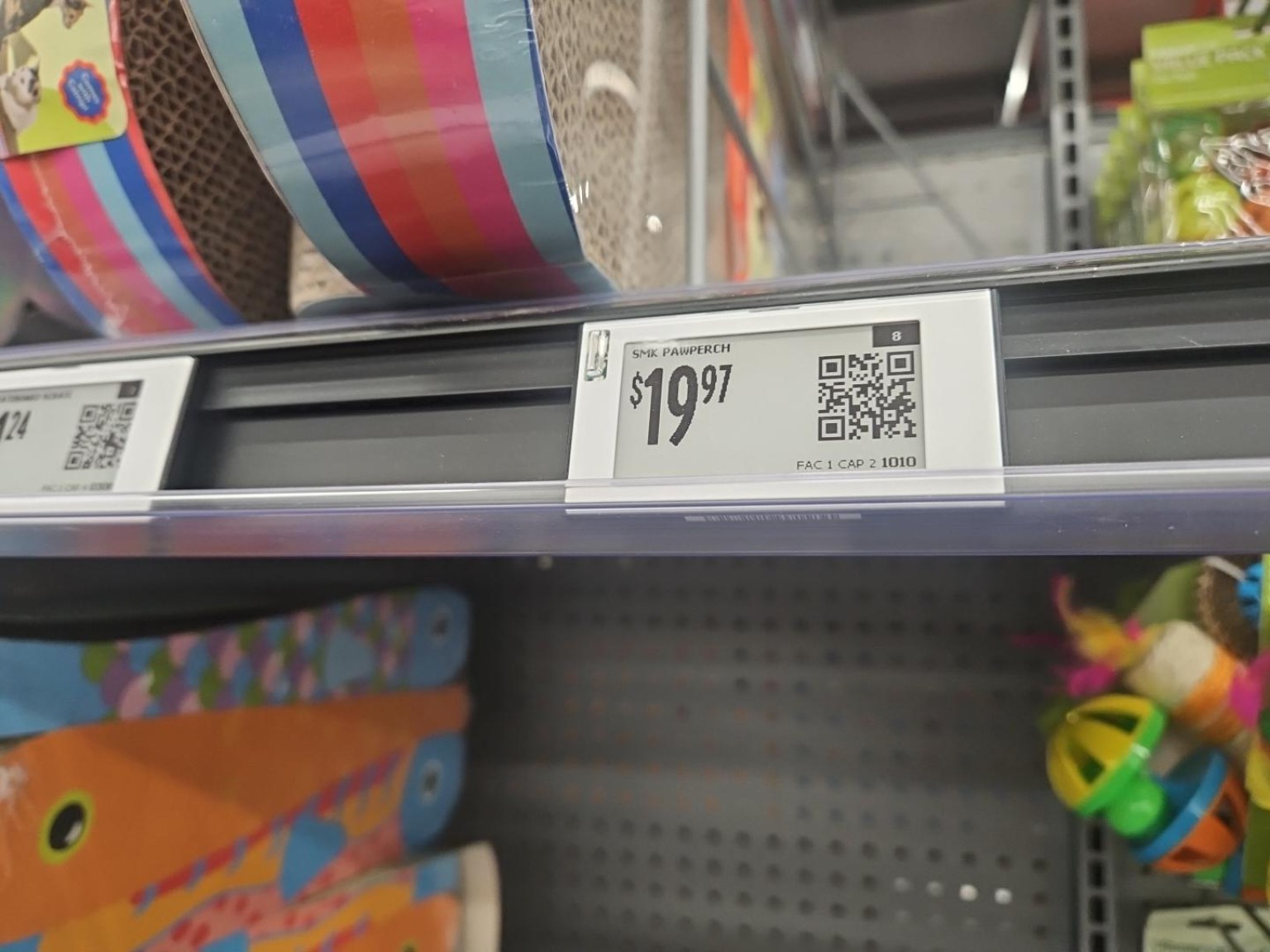
This one started with a normal human moment: a Friday night Walmart run for a cat bed.
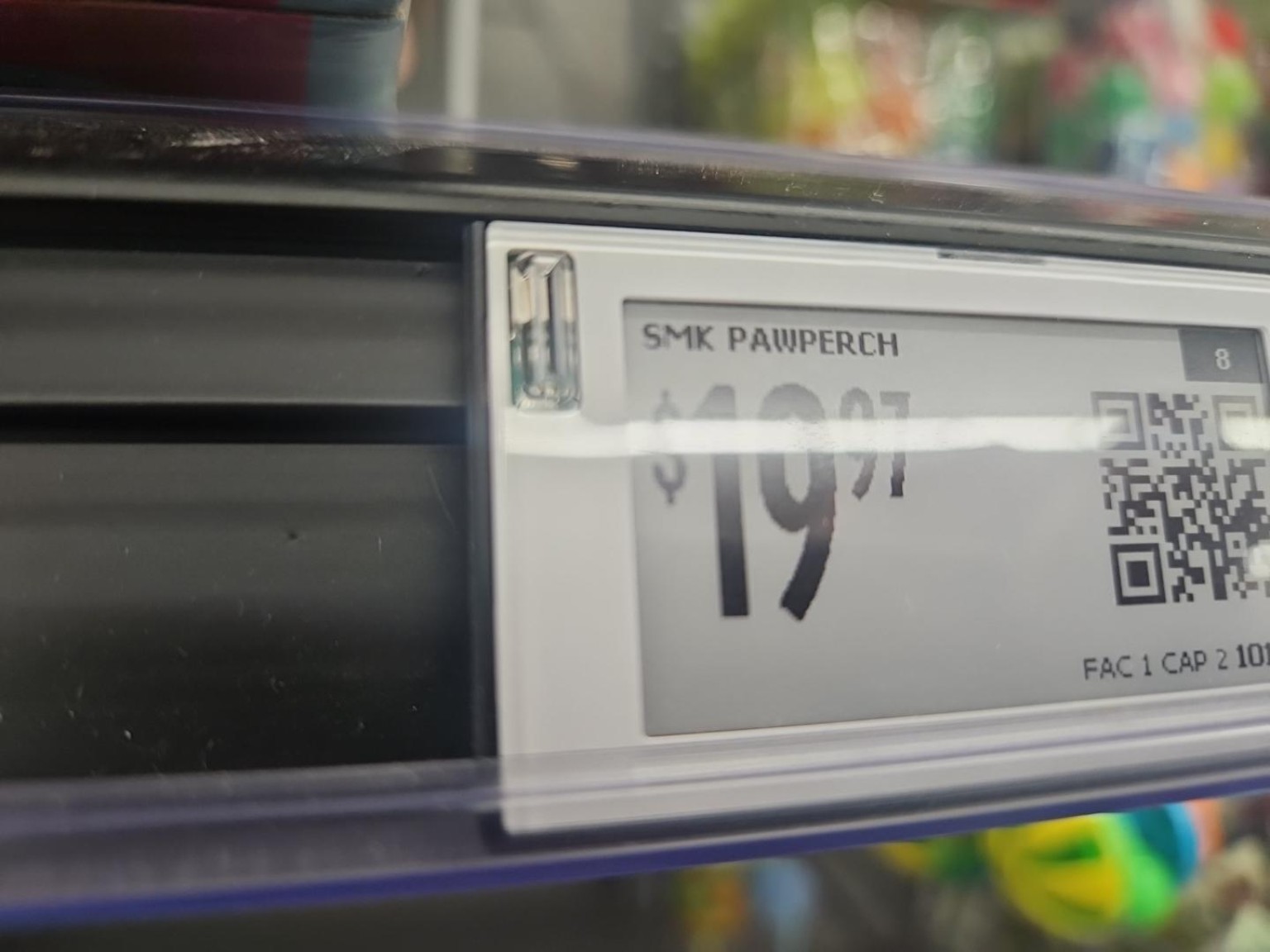
Jimmy noticed something interesting in the aisle. His daughter used the Walmart app, the shelf label blinked, and the question became:
"What just happened there?"
That turned into a small research task. Then it turned into a case study. Then it turned into a multi-site content request:
- write an article for ThinkNoodleNet
- write an article for Creative Spark Solutions
- create social copy for Creative Spark Solutions
- create a share post for Jimmy's LinkedIn profile
- prepare related social posts
- document the workflow itself for StoryShellOS
That last piece is the part I want to point at here.
The content was not just written in a blank document. It was routed through a project.
The Task Chain
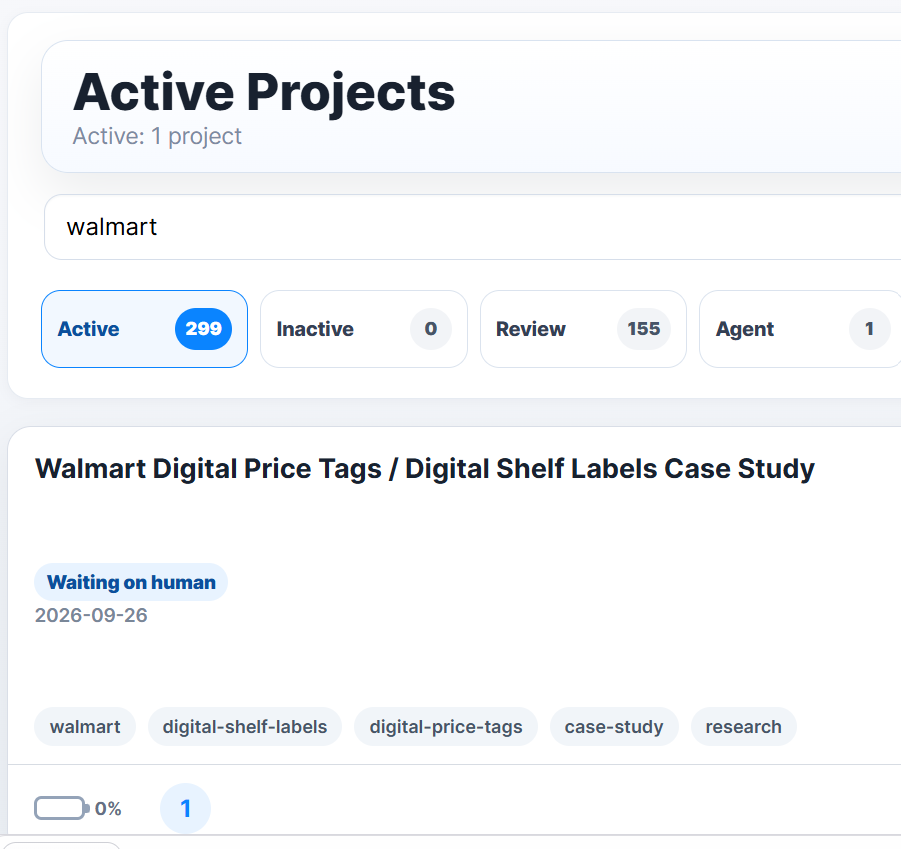
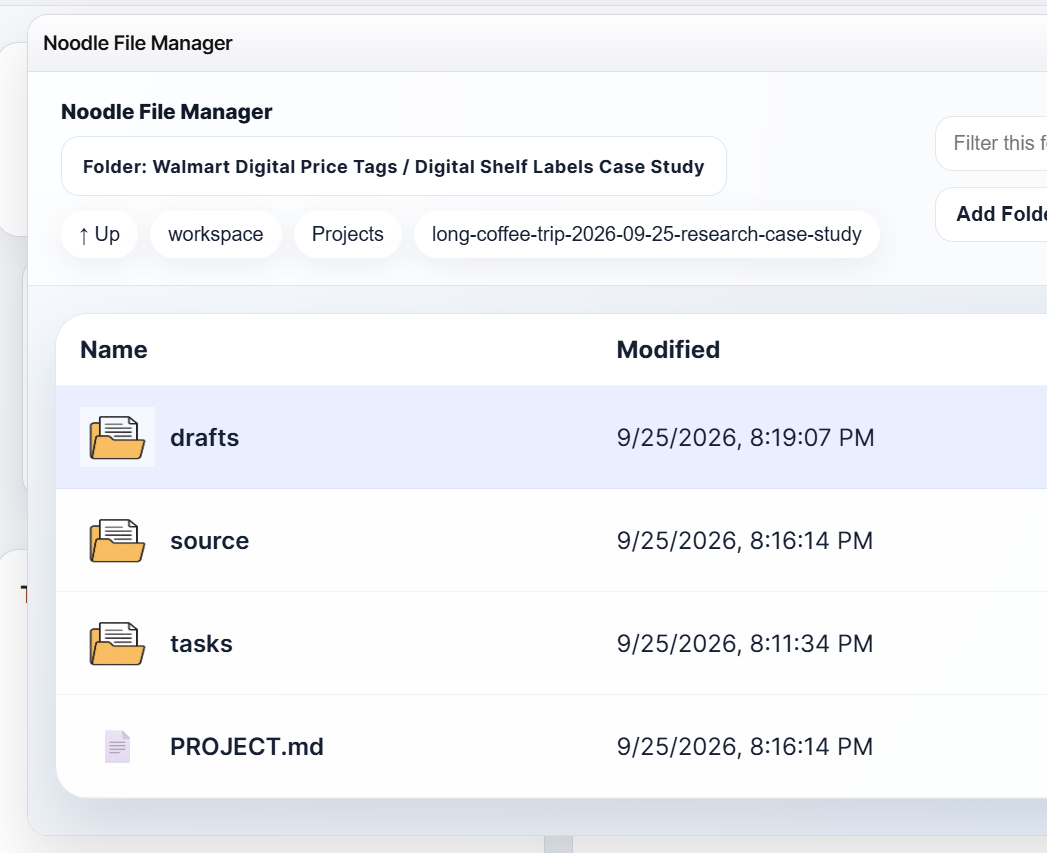
The project was created in nnProjects as:
Walmart Digital Price Tags / Digital Shelf Labels Case Study
The initial research task produced a focused case study about Walmart digital shelf labels and the architectural idea that a physical shelf position can become software-addressable.
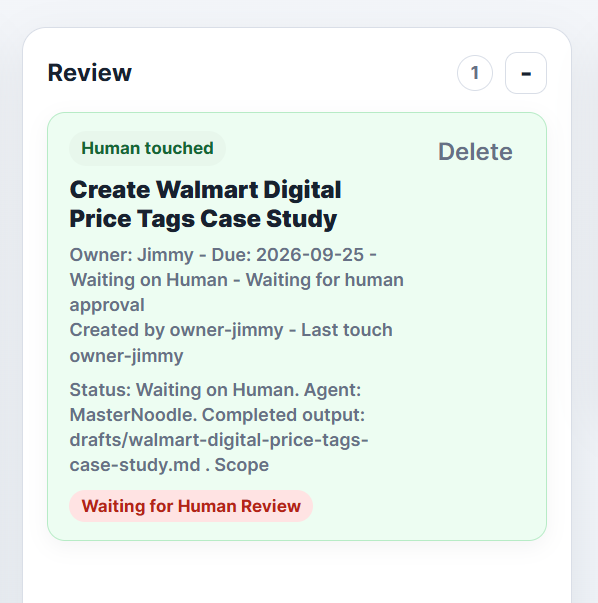
Then Jimmy created the next task: Write a post.
That task included the story, the target sites, the requested social channels, permission language, image attachments, voice instructions, and the specific angle for this StoryShellOS post.
In practical terms, the task became a publishing brief.
It had:
- the source observation
- the research context
- the required deliverables
- the image assets
- the target channels
- the voice direction
- the approval and posting intent
- the workflow record
That is exactly the kind of thing StoryShellOS is designed to make visible.
Why This Matters
Most content operations fail in boring ways.
The idea is in one place. The images are in another. The source notes are in somebody's head. The draft is in a document. The social copy is in a chat. The website update is in a repo or CMS. Nobody knows what was posted, what was staged, what still needs review, or where the proof lives.
StoryShellOS work is supposed to be different.
The project becomes the operating record.
The task holds the assignment.
The draft files hold the actual content.
The images are extracted into the project assets folder.
The publishing manifest says what goes where.
The final task update records what happened and what is blocked.
That is not glamorous, but it is the difference between content as a scramble and content as an operating system.
What We Produced
From one field observation, the task generated a full publishing packet:
- a NoodleNet article about physical retail becoming software-addressable
- a Creative Spark Solutions article about practical AI and operational mapping
- a StoryShellOS article about how the task itself became a structured content workflow
- LinkedIn copy for Creative Spark Solutions
- LinkedIn copy for Jimmy's profile
- associated social copy for NoodleNet, Creative Spark Publications, Threads, and Facebook
- an image manifest using all five task images
- a publishing dispatch with exact next steps and blockers
The result is not just "an article."
It is a reusable workflow pattern:
``text real-world observation -> project -> research task -> case study -> publishing task -> site-specific articles -> social copy -> review/publish receipt ``
That is the point.
StoryShellOS is not only about putting pages on the web. It is about making the work around those pages structured enough that humans and AI can cooperate without losing the thread.
The Human-Governed Part
There is an important boundary here.
The task included permission to post. But the site workflow still needs to respect staging, verification, and approval rules. The right move is not to silently blast half-finished content across every surface. The right move is to prepare the publish-ready packet, stage the pages through the correct website workflow, verify the staged pages, and then promote or publish from the verified URLs.
That is how you keep speed without turning automation into a mess.
The lesson from the Walmart shelf label was that the physical shelf became addressable.
The lesson from this task is that the content workflow became addressable too.
That is the StoryShellOS angle:
make the work visible, routed, reviewable, and repeatable.
Then publishing is not a heroic last-minute act.
It is the next step in a system.