
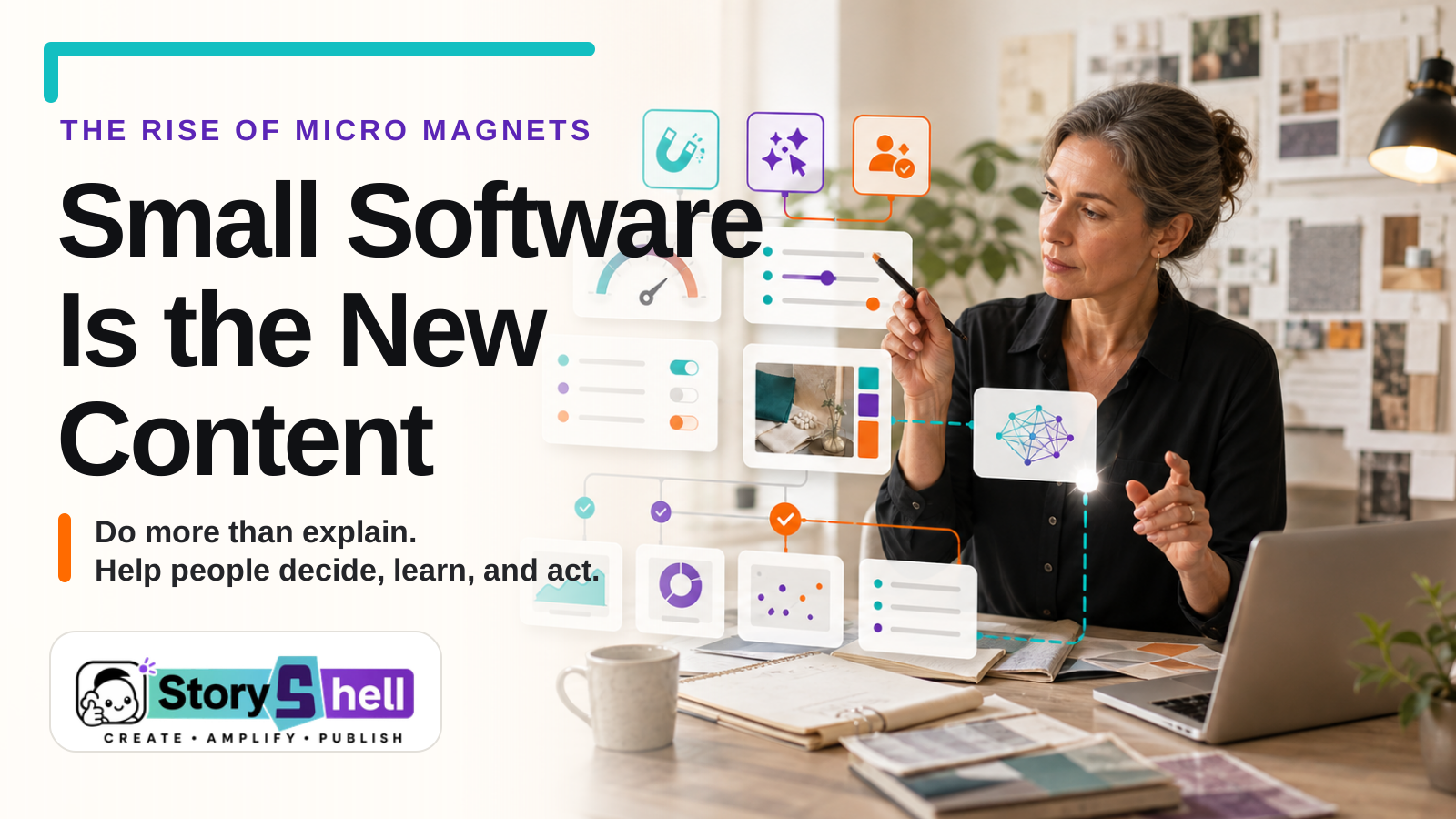
What is a micro magnet, and why is small software becoming a publishing medium?
AI-assisted development is making useful calculators, assessments, recommenders, and mini-apps practical publishing formats for expertise-led businesses.
For years, businesses have used a familiar menu when they want to publish their expertise.
Write an article. Record a video. Send an email. Turn the idea into a few social posts.
Those formats still matter. But the menu is getting bigger.
A roofing company can publish an estimator that helps a homeowner think through repair versus replacement. A consultant can publish an assessment that helps a leadership team see where a process is weak. A local financial professional can publish a scenario calculator. An educator can turn a difficult concept into a short interactive lesson.
These are not just tools sitting next to the content.
They are content.
I call them micro magnets: small, useful digital experiences that attract the right audience by helping people solve, understand, calculate, evaluate, decide, or learn something connected to the expertise of the business.
Small software experiences are becoming a publishing medium.
The definition of content is expanding
Most content asks the audience to consume an explanation. That is useful, but it is only one way expertise can travel.
An article can explain how to evaluate a decision.
A video can demonstrate the process.
A calculator can let someone test the decision against their own numbers.
An assessment can show someone where they stand. A recommender can narrow a confusing set of choices. An interactive guide can adjust the next step based on the answer someone gives. A simple game can let a learner practice a concept rather than merely hear about it.
The underlying expertise may be the same. The publishing format changes what the audience can do with it.
That is an important distinction for small businesses, consultants, local experts, agencies, and founder-led firms. Their advantage is rarely the ability to manufacture more generic information. Their advantage is judgment earned through repeated real-world work.
A useful interactive experience can put a small piece of that judgment into someone else's hands.
What makes a micro magnet useful
The word "interactive" can make people picture novelty quizzes, spinning wheels, and lead-generation widgets designed mainly to collect an email address.
That is not the strategic opportunity.
A strong micro magnet earns attention because it performs a small, honest job. It might help a buyer:
- estimate the likely range of a project
- identify a readiness gap before an implementation
- compare two reasonable options
- understand which service fits the situation
- build a simple plan for the next thirty days
- diagnose why a recurring problem keeps returning
- practice a concept through an educational mini-app or game
The experience does not need to replace professional advice or make the final decision. It needs to help the user take one meaningful step with more clarity.
Think smaller than a software product and more useful than a downloadable checklist.
AI changes the production economics
Until recently, even a modest custom application could require a designer, a developer, a project manager, a marketing team, and a budget large enough to push the idea to the bottom of the list.
AI-assisted coding and modern development tools are reducing that friction. They can help prepare interface options, write routine code, connect data, test paths, and revise a working prototype far faster than older workflows allowed.
That does not mean software has become effortless. Someone still has to define the problem correctly, supply the subject-matter expertise, review the logic, test the edge cases, protect sensitive data, and decide when the experience is trustworthy enough to publish.
The important change is not that humans disappear.
It is that a much smaller team can now create something useful.
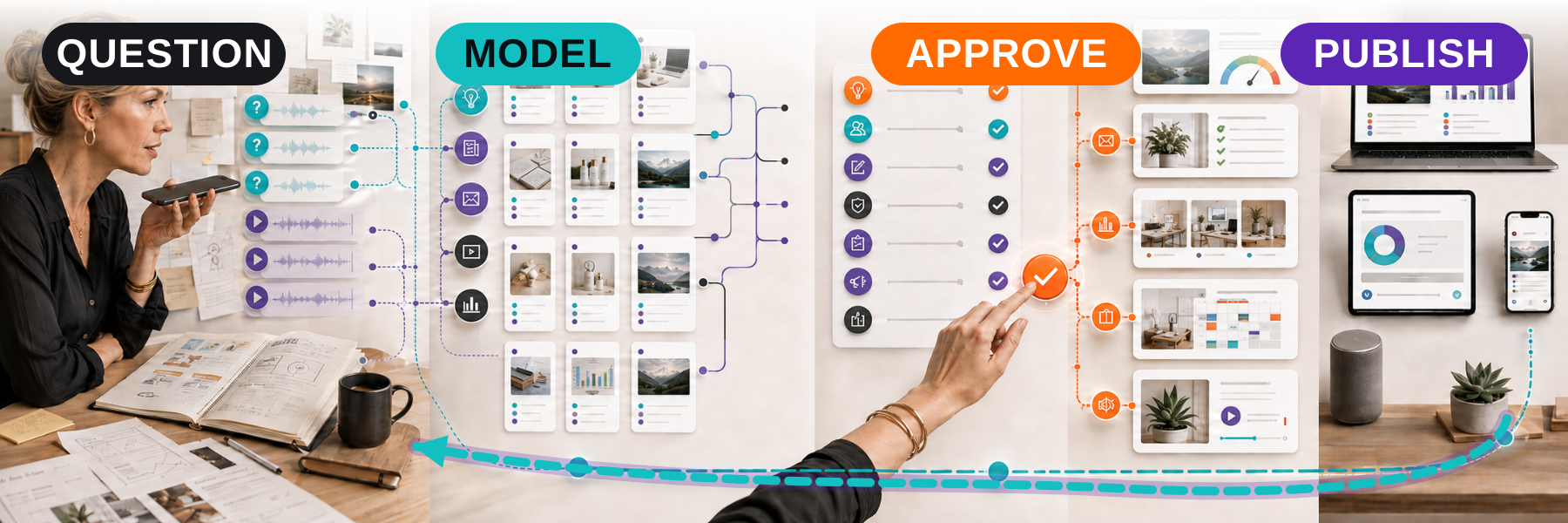
An idea that once could not survive the cost of a formal development project may now be practical as part of a normal publishing operation. A spreadsheet used internally for years might become a customer-facing estimator. A consultant's discovery questions might become a readiness assessment. A trainer's decision tree might become an interactive guide.
The human provides the expertise. The system helps turn that expertise into useful things.
Good examples start with a real decision
The best micro magnets are rarely born from the question, "What app should we build?"
They begin with a problem the business already understands.
An energy consultant may hear the same question about project payback every week. That question can become an ROI calculator with clearly stated assumptions.
A marketing agency may repeatedly explain why a website is not ready for paid traffic. That expertise can become a diagnostic that identifies missing proof, weak conversion paths, or unclear offers.
A home-services company may know which symptoms suggest maintenance, repair, or replacement. That knowledge can become a guided estimator that helps a homeowner prepare for a better conversation.
An educator may know where students usually get stuck. That can become a small learning experience that reveals the next concept only after the learner applies the current one.
In each case, the business is publishing its way of thinking—not giving away every answer and not automating the professional out of the process.
This changes the content planning question
The old planning question was often, "What should we post this week?"
The better question is, "What would be most useful to our audience right now?"
Sometimes the answer is still an article. Sometimes it is a video, a customer email, or a straightforward service page.
But not everything should become a blog post.
When the audience needs to compare, calculate, choose, diagnose, or practice, an interactive format may carry the expertise better than another explanation.
Sometimes your best content is software.
Where StoryShellOS fits
StoryShellOS is being designed as an owned publishing operation that helps a business turn its expertise into the format that makes the most sense: articles, social content, email, video, and increasingly small interactive applications.
The service model for more complex interactive work is still being shaped. A useful principle is already clear, though: interactive tools require more development effort than a typical article or social post, so they would naturally carry more weight inside a managed publishing plan.
The point is not to promise an endless supply of apps. It is to make the format available when it is the right way to publish the idea.
The takeaway
The future of business content is not simply more words produced more quickly.
It is expertise packaged so people can use it.
Small software experiences are becoming a publishing medium. The businesses that recognize that early will have more ways to teach, demonstrate judgment, start better customer conversations, and become genuinely useful before a sale.
In Part 2, we will look at why that usefulness becomes even more valuable as AI makes generic written content abundant. Part 3 turns the idea into a practical way to choose the first micro magnet worth building.
Spend less time feeding your marketing machine and more time giving it something worth talking about.