
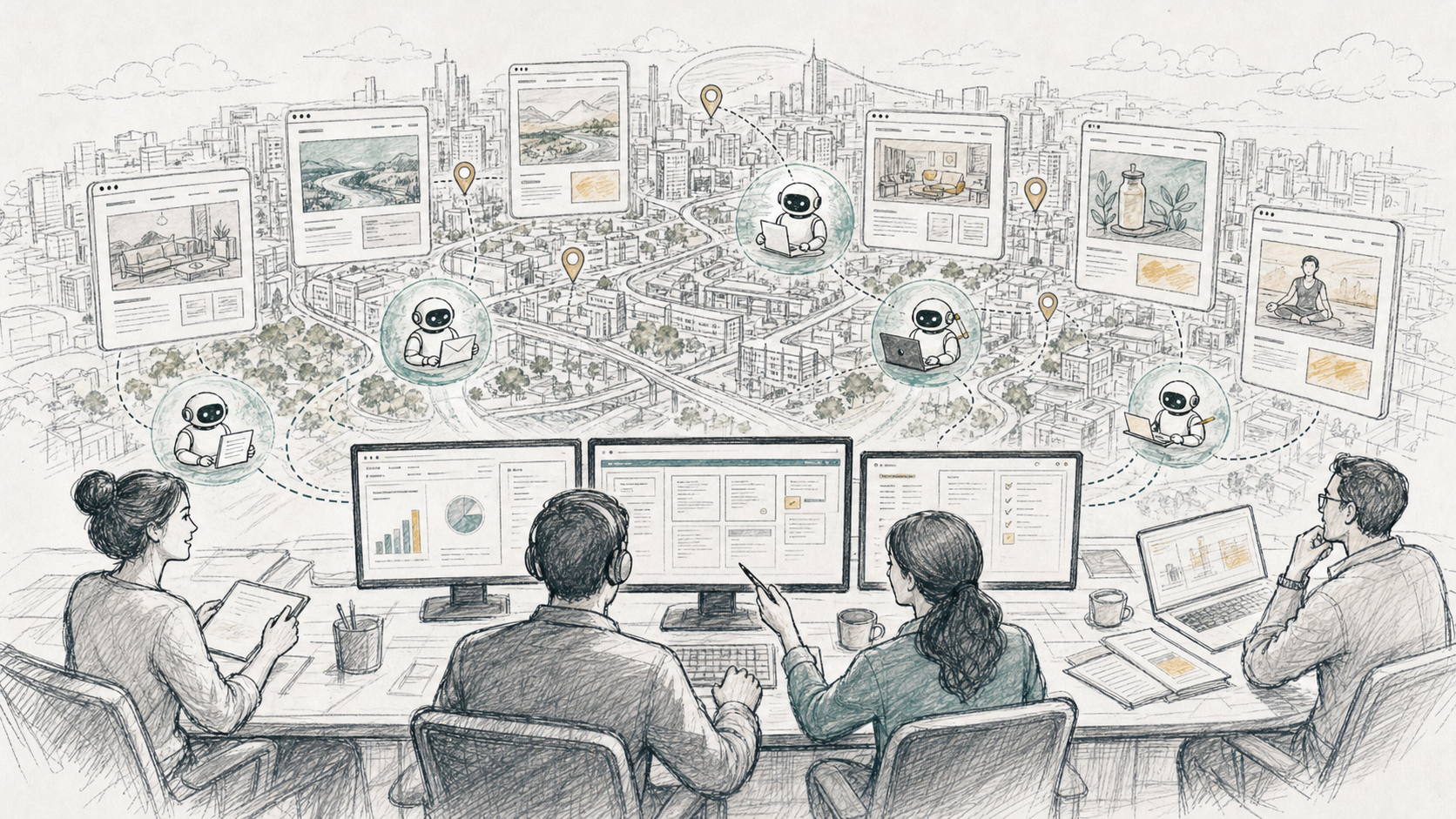
How can a marketing team work like a pseudo-onsite team for its clients?
Agent-assisted web operations can help a marketing team feel more present for clients without pretending to replace account strategy or human judgment.
One of the more useful patterns for agentic web management is not fully automatic publishing.
It is helping a marketing team behave more like a small onsite web operations team for each client.
That does not mean pretending the agency lives inside the client's business every day. It means the system can keep enough structure, context, and workflow around each client site that the team is not starting from zero every time something needs to change.
For a small agency, that matters.
A client has a seasonal offer. A service page is outdated. A landing page needs to match a new campaign. A form needs a better handoff. A blog post should be drafted from notes, calls, or approved positioning. None of those jobs are mysterious. They are just easy to delay because the work is scattered across inboxes, docs, old pages, and half-remembered decisions.
That is an operating problem.
The pseudo onsite model
In this model, StoryShell holds the web-facing surfaces. Microsites, landing pages, blog posts, forms, themes, domains, and publishing states stay organized in one lean web engine.
NoodleNet Professional carries the layer around it. That is where the research, client notes, workflows, approvals, integrations, logs, and follow-up actions can live.
An authorized AI worker can help prepare the next piece of work. It can gather the source material, shape a draft, assemble a campaign surface, suggest a form update, or identify which client page may need attention. The marketing team can then review the work, adjust the message, and approve what is ready.
That feels different from a traditional website update process.
The agency is not waiting for a giant rebuild. The client is not stuck explaining the same context over and over. The AI worker is not acting as the final publisher. The system is helping the team stay close to the client's public web presence without becoming chaotic.
What this changes for clients
Clients usually do not care about the internal mechanics of a CMS. They care that their offers are current, their forms work, their campaigns have somewhere to land, and the right person follows up when someone raises a hand.
Agent-assisted operations can help with that.
The client gets a more active web presence. The agency gets a cleaner way to manage repeated work across multiple accounts. AI workers can handle preparation and maintenance tasks that normally get stuck between meetings.
But the human boundary still matters.
The agency should remain responsible for judgment, positioning, client promises, and publication. The AI worker can prepare the work. It should not silently decide what the client says in public.
That is the useful version of the pseudo onsite team. It is not magic. It is a disciplined operating model for keeping client web surfaces alive.