
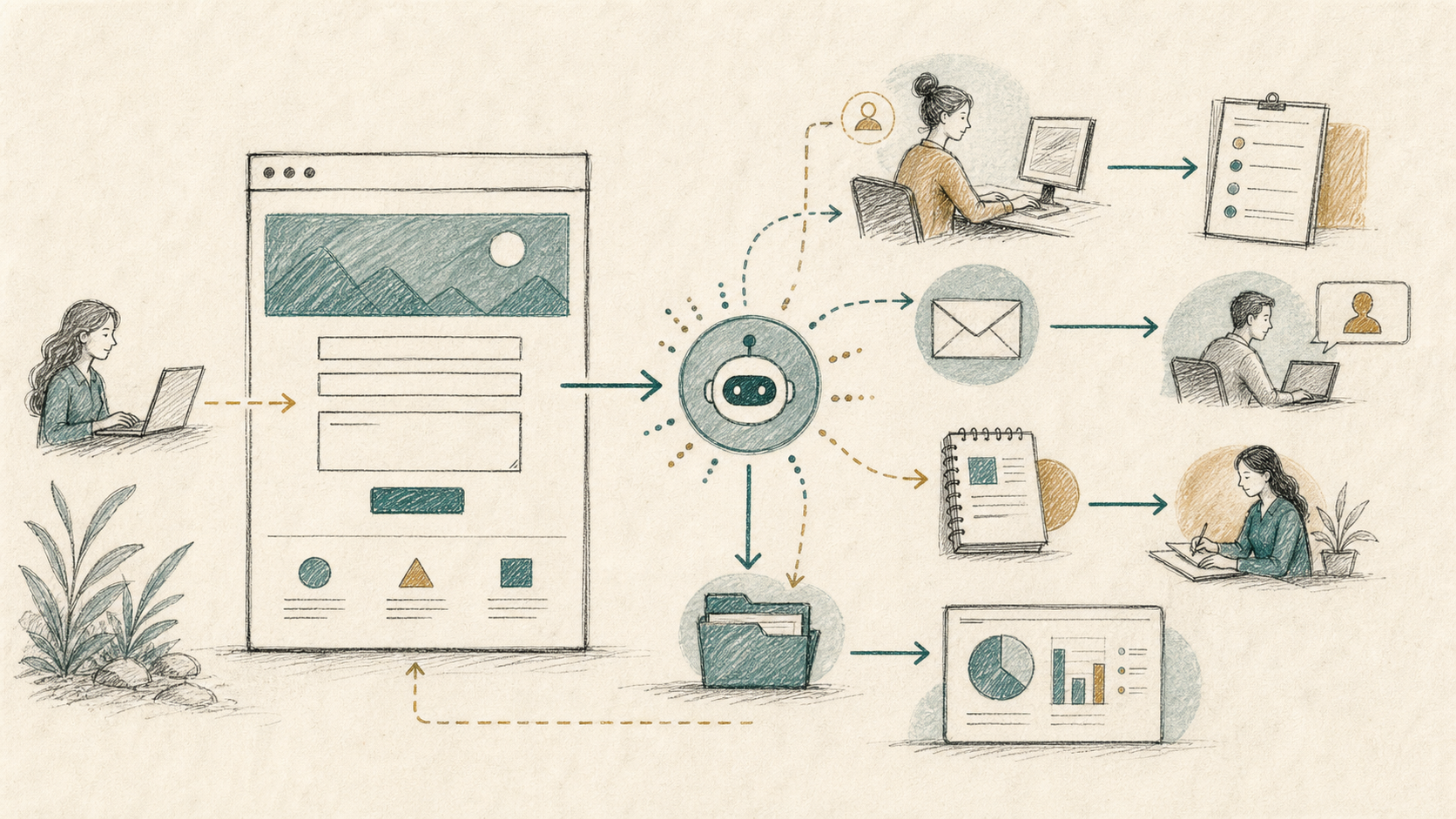
How does a website form become part of an operating workflow?
A form is not just a box on a website. It is where a public visitor becomes an operational responsibility.
A form is one of the smallest things on a website, and one of the easiest things to underestimate.
It looks like a few fields and a button.
But operationally, it is the moment a visitor becomes a responsibility. Someone asked a question. Someone requested help. Someone expressed intent. Now the business needs to decide what happens next.
That is where the website stops being a brochure and starts becoming a workflow.
Intake needs structure
In an agentic web management model, forms should not be treated as loose messages floating into a random inbox.
The message should carry the visitor's name, email address, subject or context, and what they actually asked for. The submission should show a clear success state when it works and a useful error state when it does not. Replies should be able to go back to the person who submitted the form when the delivery path supports it.
That sounds basic because it is basic.
It is also where a lot of small business websites quietly fail.
A form that does not reliably deliver is worse than no form at all, because it creates a promise the business does not keep.
Follow-up is part of the product
StoryShell can handle the web-facing form surface. NoodleNet Professional can carry the heavier follow-up around it.
That is the right separation. The public page stays lean. The operating layer can route the submission, log the event, trigger a follow-up task, support review, or connect the intake to a broader workflow.
AI workers can help here too. They can classify the inquiry, prepare a reply draft, connect it to context, or recommend the next step.
But again, the boundary matters. The system should help prepare the work. It should not silently make every business decision.
A good form reduces uncertainty
A working form should reduce uncertainty for everyone involved.
The visitor knows the message went through. The business knows what came in. The right person can follow up. The operating system can keep a record. If an AI worker assists, it does so inside a structured path instead of guessing from a messy inbox.
That is why forms matter more in the agentic world, not less.
They are small public surfaces connected to real business responsibility. Treat them that way.