The most useful publishing test I have seen lately did not start with a blank document.
It started in a park.
Jimmy was walking through Richmond VegFest with a phone in his hand, moving between booths, taking pictures, noticing odd little details, asking questions, reacting in the moment, and talking through what might matter later.
There was no neat outline. No content calendar open on a laptop. No polished draft waiting to be filled in.
There was just a real person inside a real day, trying to catch what was useful before it disappeared.
That is exactly the kind of moment most business content workflows waste.
You come back with photos, a few notes, a couple of good thoughts, and the vague feeling that there was something in there. Then the reconstruction begins. What was that booth called? Why did that picture matter? Which article was this for? Was this a social post, a product insight, a customer story, or just a personal note?
The Richmond VegFest session showed a better pattern.
It turned one messy field session into source material, project work, site-specific articles, social packets, review steps, and publishing receipts. Not because AI magically "made content," but because the system helped preserve the story while it was still warm.
The story started before the writing did
Most publishing systems act like the work begins when someone sits down to write.
That is too late.
The useful part often happens earlier, while someone is still walking around, still reacting, still deciding what they think. At VegFest, the capture layer was simple enough to use in motion. Jimmy could take a picture, talk through what he noticed, ask for quick context, change his mind, laugh at something, and keep moving.
The goal was not to write the article from the park.
The goal was to keep the raw material from going flat.
That meant preserving:
- what was seen
- why it mattered
- what was said in the moment
- which photo belonged to which idea
- which details were public material
- which details were just source context
- where a small observation pointed to a bigger business pattern
That is the first lesson for small businesses: the best content system is not the one that writes fastest. It is the one that helps you keep meaning attached to the moment.
The photos became evidence, not decoration
The pictures from the day were not just "images to add later."
They carried jobs.
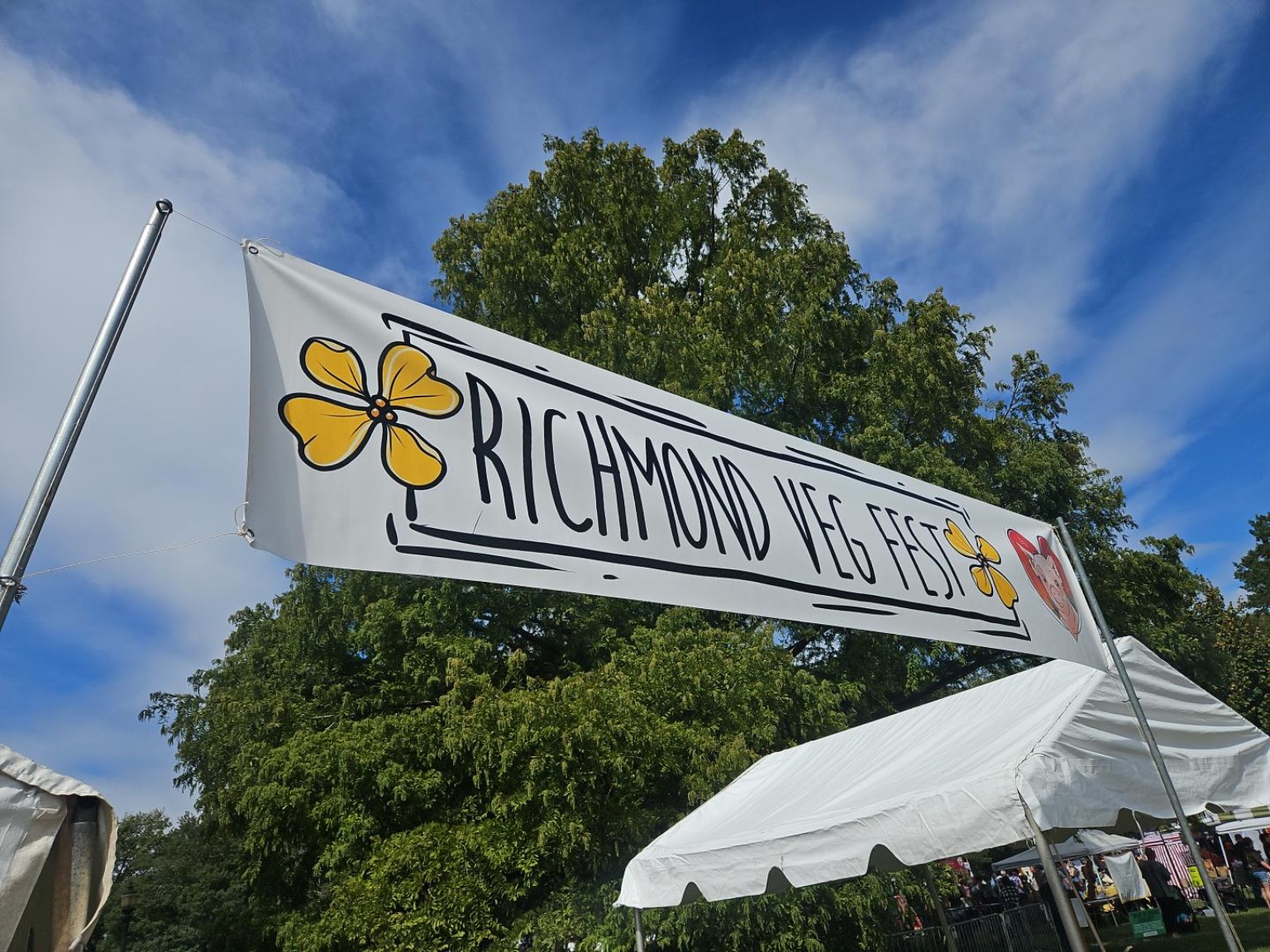
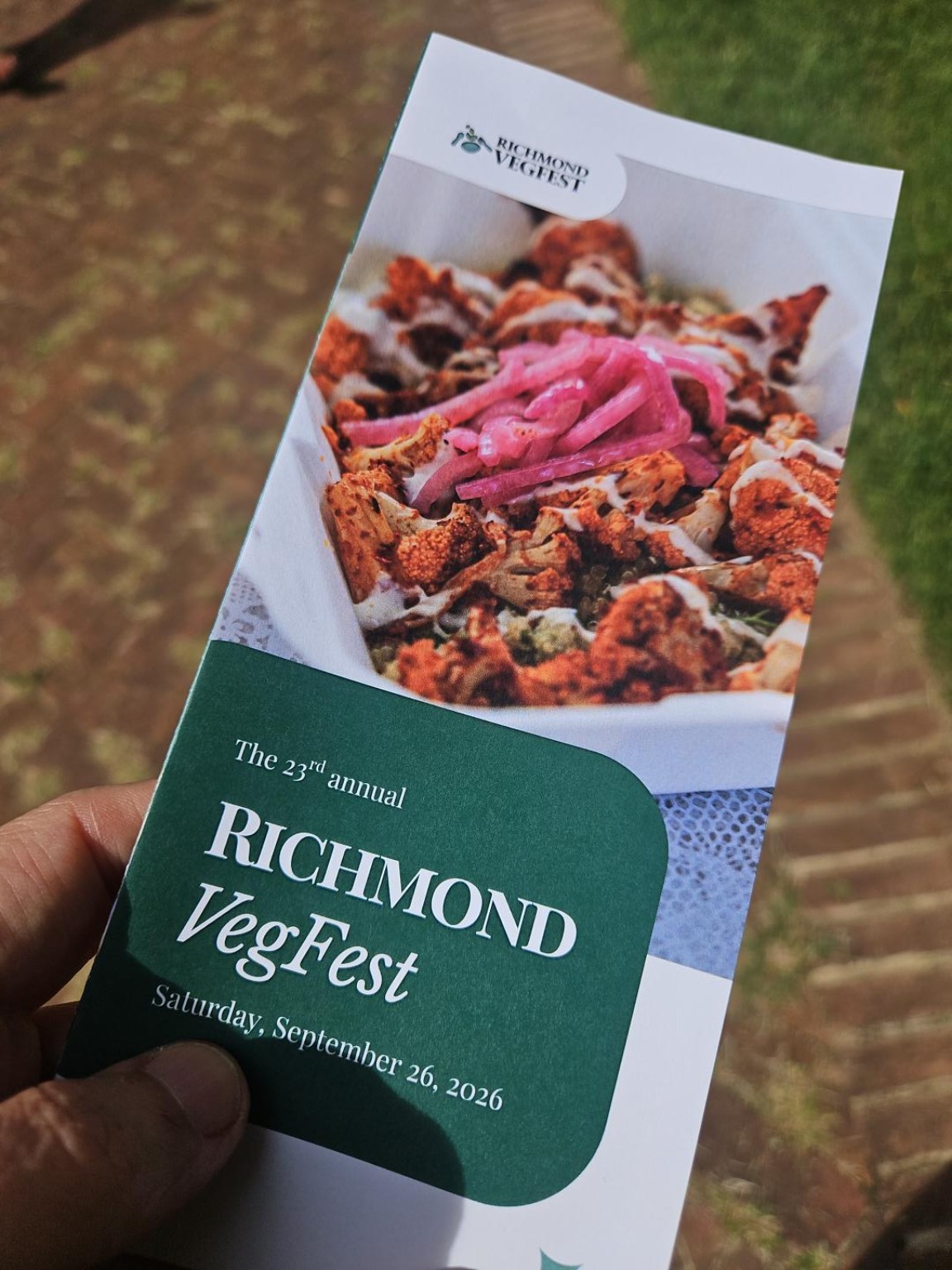
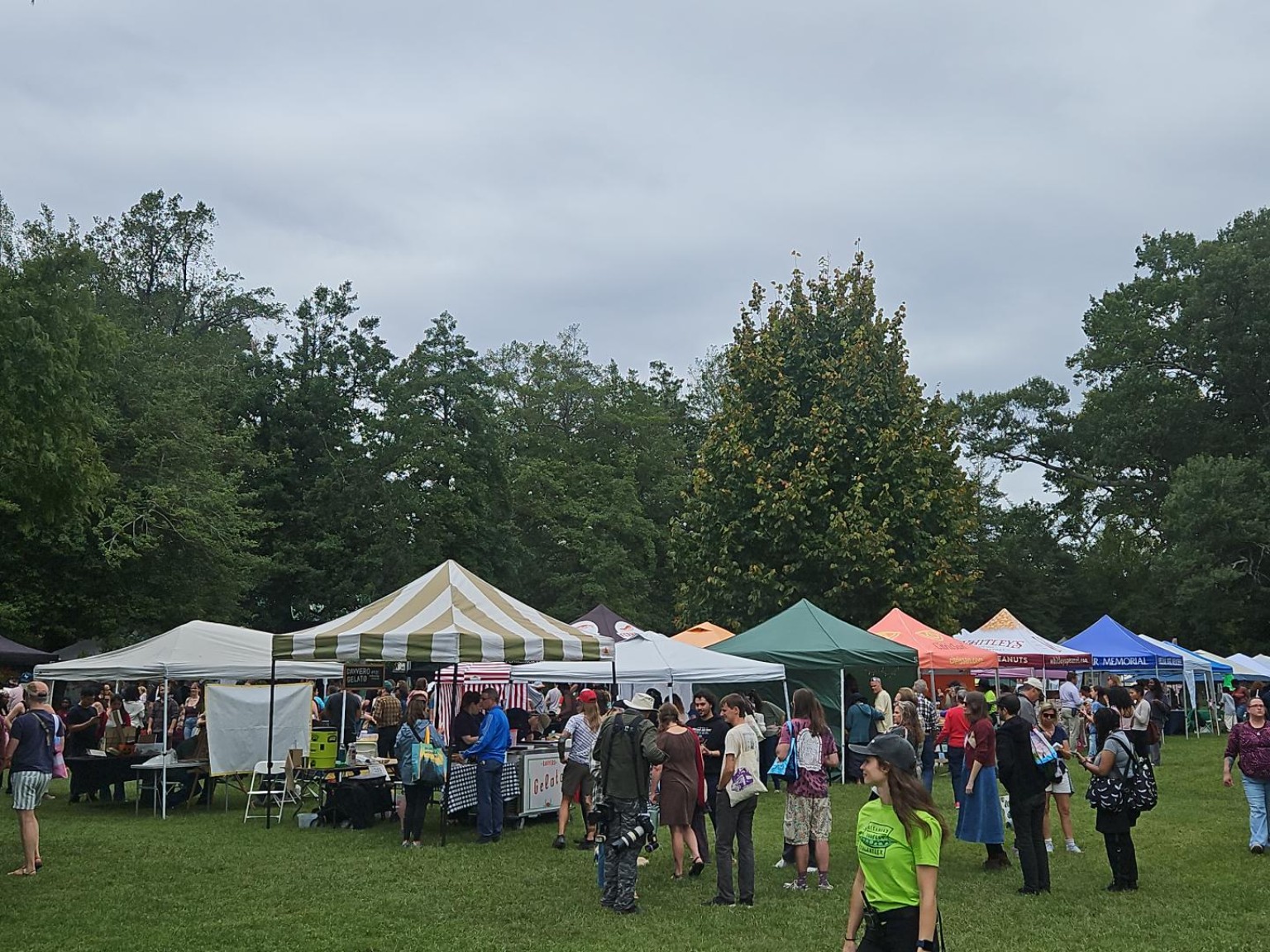
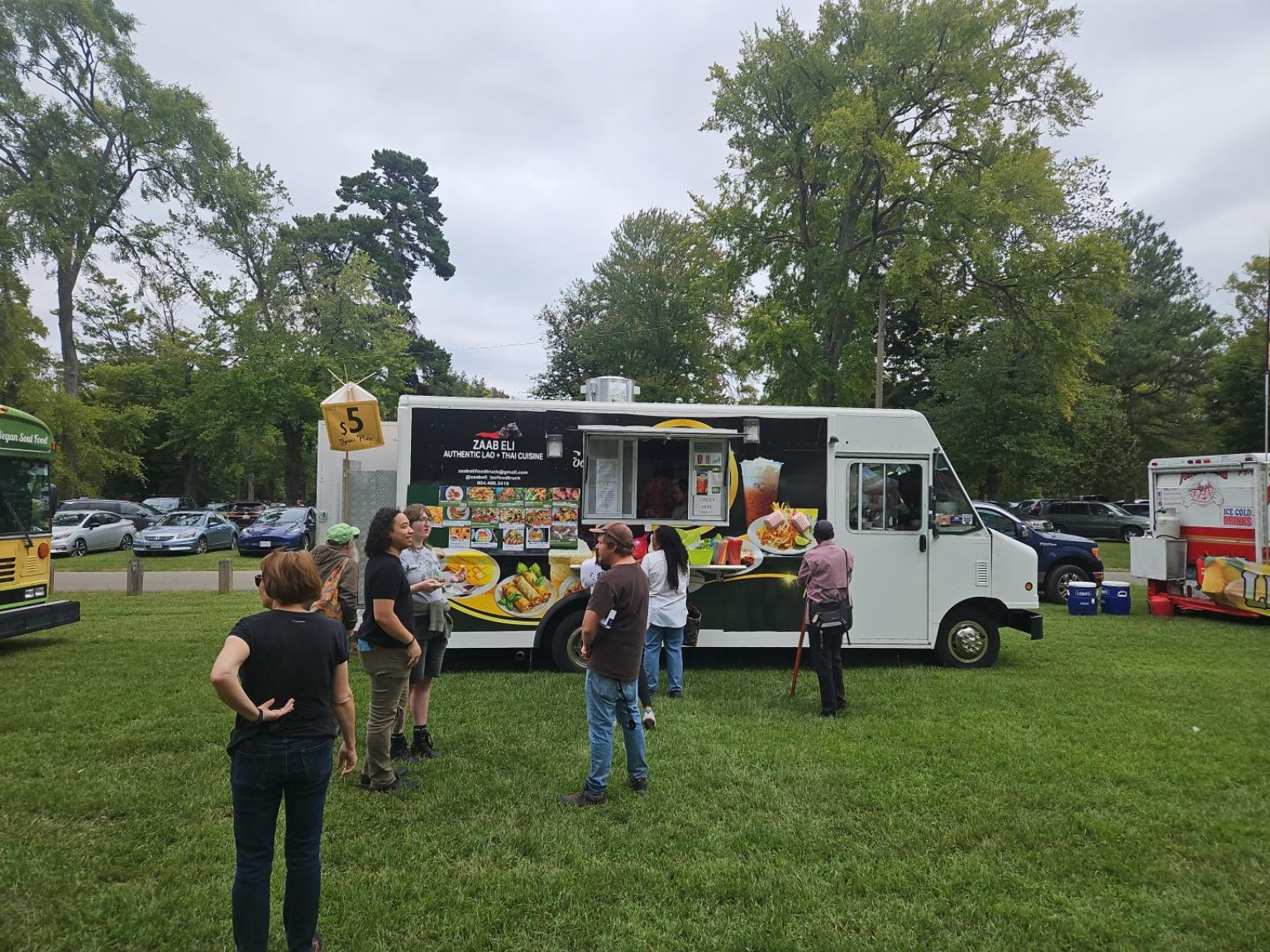
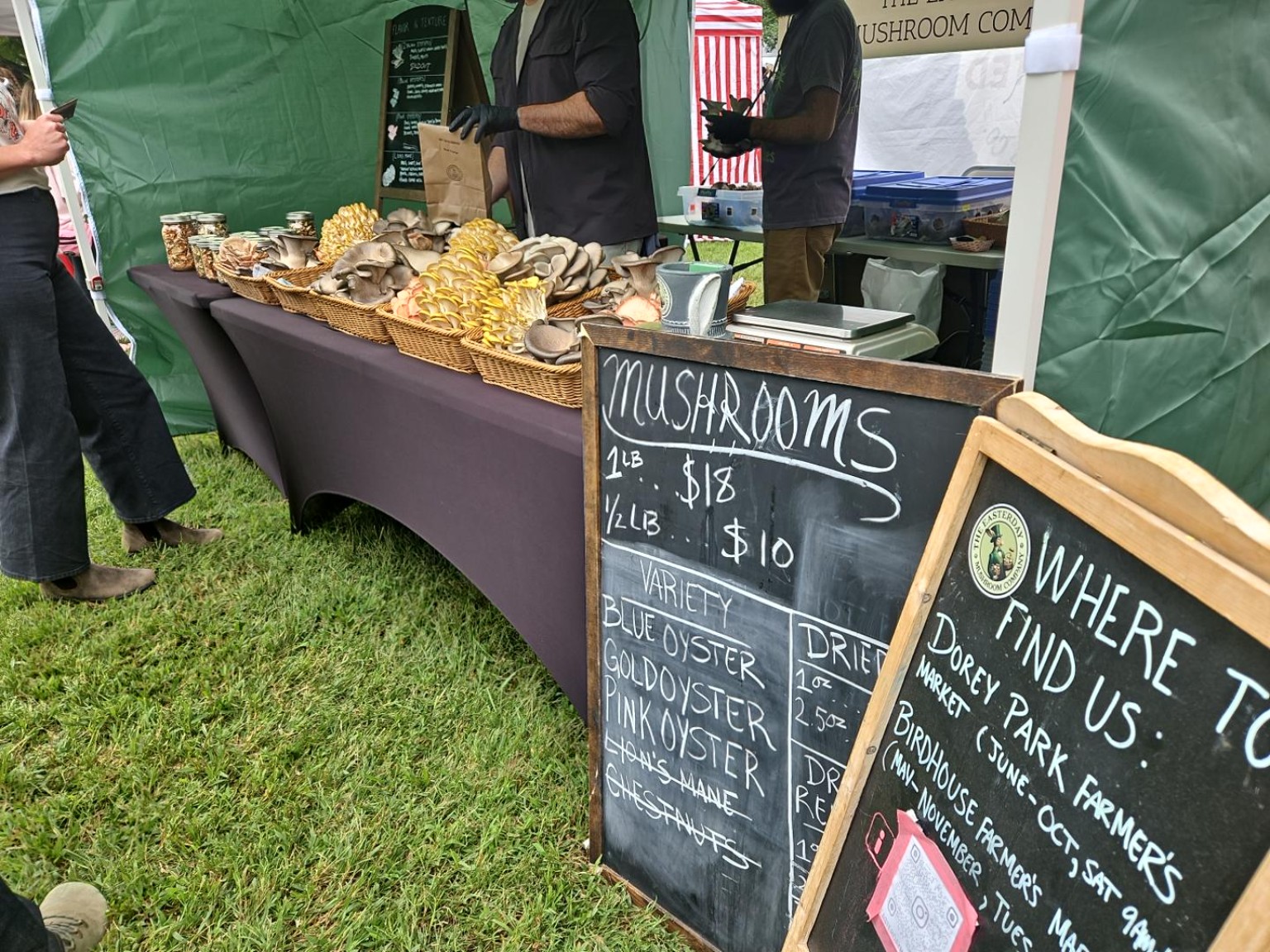
The entrance banner proved the event. The printed program anchored the date and setting. The busy vendor field showed why the workflow had to be light enough to use while walking. The food truck and receipt captured a tiny but real friction point: timing, environment, and choices affect behavior. A mushroom booth became more than a booth photo once the surrounding notes connected it to knowledge capture, vendor context, and later storytelling.
That changes how publishing works.
A normal content process treats images like assets.
This workflow treated them like evidence.
Each image needed a reason. Why keep it? Which story does it support? Which site should use it? What should the caption say? Is it proof, atmosphere, source context, or something to hold back?
That may sound fussy until you have more than three things to publish. Then it becomes the difference between a usable campaign and a folder full of guesses.
One experience had more than one story inside it
Once the source packet existed, NoodleNet could turn the session into actual work.
Not one generic recap. Not one forced "content piece" that tries to serve everyone.
Three different publishing lanes came out of the same field session:
- Third Place Nomads could tell the human field-reporter story.
- NDR Guru could explain Interactive Notes and second-brain capture.
- StoryShellOS could explain the workflow, review gates, and publishing system.
Same walk.
Same photos.
Same source notes.
Different readers. Different promises. Different voices. Different calls to action.
That is where a lot of AI content systems fall apart. They can generate variations, but they do not naturally know why one version belongs on one site and another belongs somewhere else. They do not know the difference between a personal field essay, a second-brain product lesson, and a workflow case study unless the operating system preserves that context.
StoryShellOS has to know the destination, not just the topic.
Review is where the system becomes trustworthy
The field test also exposed a problem, which is good. A workflow that never reveals its weak spots has not been tested hard enough.
Two article lanes moved cleanly. One stalled.
The issue was not the idea. The issue was routing.
The StoryShellOS article task had blog publishing, social posting, and Facebook group outreach too tangled together. That let the wrong worker path get involved too early. A browser-based Facebook outreach worker should not be the first thing handling a StoryShellOS article.
The better order is boring, and that is why it works:
1. create the article draft 2. stage it 3. show it in Marketing Review 4. approve it 5. publish it live 6. verify the public URL 7. then create social and outreach work from the approved article
That is not red tape. It is how you keep publishing from turning into a guessing game.
Review is not a courtesy screen. It is the control plane.
If Marketing Review does its job, the human can see what is ready, what is blocked, which image will be used, which channel it belongs to, and whether the campaign should move as a group or one item at a time.
Facebook group outreach is a different class of work
This was another useful reminder from the VegFest project: not every publishing task is the same kind of task.
Normal social posting can often be scheduled through a connector. Facebook group outreach cannot be handled like a blind publish button.
Group outreach has to be approved more like a mission. The worker still has to read the actual conversations, decide whether the article genuinely helps, answer the person first when that is the right move, and skip weak fits.
That is human-in-the-loop design even when a browser worker is doing the clicking.
Approval defines the guardrails.
Judgment still happens inside the work.
The real ROI is less reconstruction
The business value of this pattern is not "more content."
It is less reconstruction.
That matters more than it sounds.
Most small-business content work is expensive because the same context has to be rebuilt over and over. Someone has to remember what happened, find the right photo, explain why it mattered, adapt the idea for each channel, check whether the draft was approved, and figure out whether the live page is actually live.
The VegFest workflow cut into that hidden cost.
Dead time became thinking time. Capture time became organization time. The writing started further downstream. The source images already had context. The review step made the state visible. The publishing system knew what was allowed to move.
That removes friction from the parts of publishing that usually feel heavier than they should:
- remembering what the moment meant
- finding the right image later
- explaining the same context to multiple people
- rewriting the same idea for every channel from scratch
- wondering whether a staged URL is actually live
- guessing which task is blocked and why
That is the practical value. Not a prettier content treadmill. A shorter path from real experience to useful public work.
What the better version should feel like
The product direction is clearer now because the day made the workflow visible.
The future version should feel almost casual:
Start a working session.
Walk around.
Talk.
Take pictures.
Ask questions while still moving.
Let the system enrich, connect, and organize the material.
Send the packet into NoodleNet and StoryShellOS.
Review the ready cards.
Approve what should publish.
Let the receipts close the loop.
That is not just a better blogging workflow. It is a better interface for turning lived experience into useful business work.
The point is not to remove the human. The point is to stop wasting the human's best material during the handoff.
What this field test proved
The Richmond VegFest session proved that StoryShellOS is strongest when it sits inside a larger operating pattern.
ChatGPT can be the quick field capture surface.
NoodleNet can turn that capture into tasks, source folders, image contracts, and agent handoffs.
StoryShellOS can stage and publish the approved public surfaces.
Marketing Review can become the approval cockpit.
Browser workers can handle the places where human-style judgment is still required, like Facebook groups, as long as the mission and guardrails are clear.
Receipts can return everything to the project so the system learns instead of forgetting.
That is the product.
Not a blog generator.
A controlled path from real human context to approved public work.
That is what the VegFest field session made visible: the article is not the beginning of the work. It is the proof that the whole chain held together.