A good agentic marketing team does not just make more content. It makes the path from idea to useful published work easier to trust.
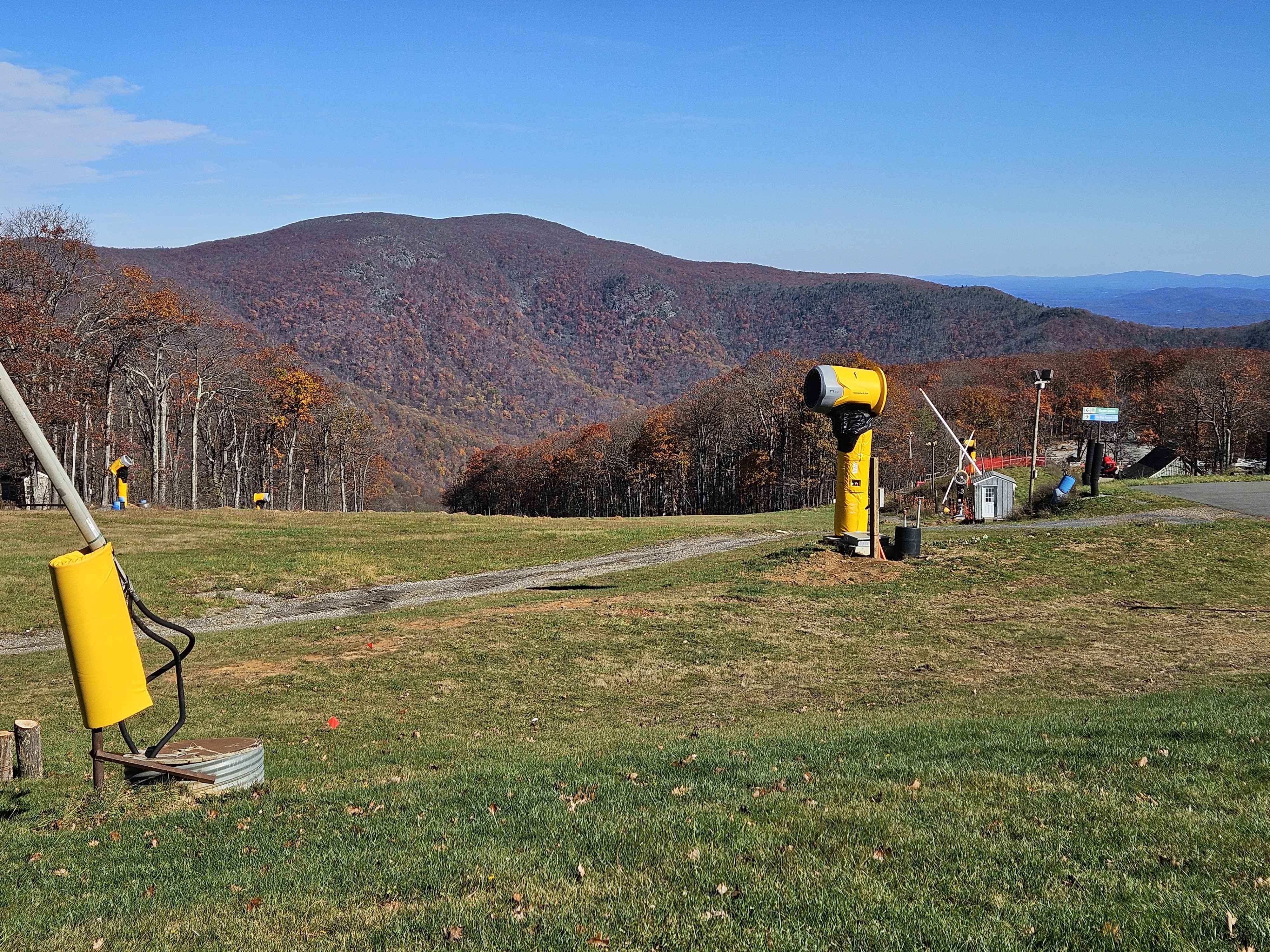
I got the idea for this post during a preseason lunch at Wintergreen Ski Resort. The mountain was quiet, the season had not started, and I was looking at a view that made it easier to notice a useful question:
What should a marketing team be able to do while the founder is still eating lunch?
The answer is not “publish random things faster.” It is to turn a real observation into a coordinated piece of work: understand the audience, shape the idea for the right channel, create the supporting assets, publish through the proper engine, and leave a receipt behind.
The work behind one useful idea
Here is what our agentic marketing and publishing team did with that moment.
First, we captured the observation instead of trusting memory to keep it. The idea became a clear editorial angle: AI should remove repetitive writing work while people keep ownership of judgment.
Then the team checked the channel guides. NDR Guru is about second brains, notes, decisions, and practical AI-shaped thinking. That audience needed a grounded article, not a generic productivity slogan.
We wrote an original article, created a pencil-led visual direction, and published it to NDR Guru. Before I finished my salad, that article was live in the publishing system with a public route and a record of what happened.
The next step is where an agentic team earns its keep. The same underlying idea can be adapted for StoryShellOS, where the focus is the publishing system itself, and for Third Place Nomads, where the focus is attention, place, and the human experience of making something.

Why this is different from “let AI write a post”
There is a big difference between asking a chatbot for copy and operating an agentic marketing team.
A copy request usually ends with text. A publishing team has to answer more questions:
- Who is this for?
- What does this channel believe is useful?
- What should be carried over, and what should change?
- Which image belongs with this version?
- Where does it get published?
- What proves it actually went live?
- What should happen next?
Those questions are the work. The writing is one part of it.
The operating pattern
The pattern is simple enough to explain:
1. Capture: preserve the useful observation and its source context. 2. Shape: turn it into a clear idea for a specific audience. 3. Adapt: use the channel guide to change the voice, examples, images, and CTA. 4. Publish: use the existing publishing engine and approved route. 5. Verify: check the public page, assets, and publication receipt. 6. Learn: record what worked so the next run starts with better information.
That is what makes the team agentic. The agents are not just generating paragraphs. They are moving a piece of work through a reliable system while keeping the human goal visible.
The founder's job gets better
This does not remove the founder from marketing. It removes the founder from having to remember every small handoff.
The founder can notice something at lunch, explain why it matters, and trust the team to do the operational work: research, drafting, channel adaptation, visual preparation, scheduling, publishing, and verification.
The human still owns the point of view. The system makes it easier for that point of view to travel.
That is the promise of an agentic marketing and publishing team: not noise at machine speed, but useful ideas turned into accountable output.
If your marketing process still depends on one person remembering every file, link, revision, and publishing step, start by mapping the handoffs. Then give each handoff a clear owner, a visible status, and a receipt.
That is how a lunch observation becomes a publishing system.